125kW/125kWh 170Ah Sodium-Ion Outdoor Energy Storage Cabinet
1. Product Overview
1.1 Product Introduction
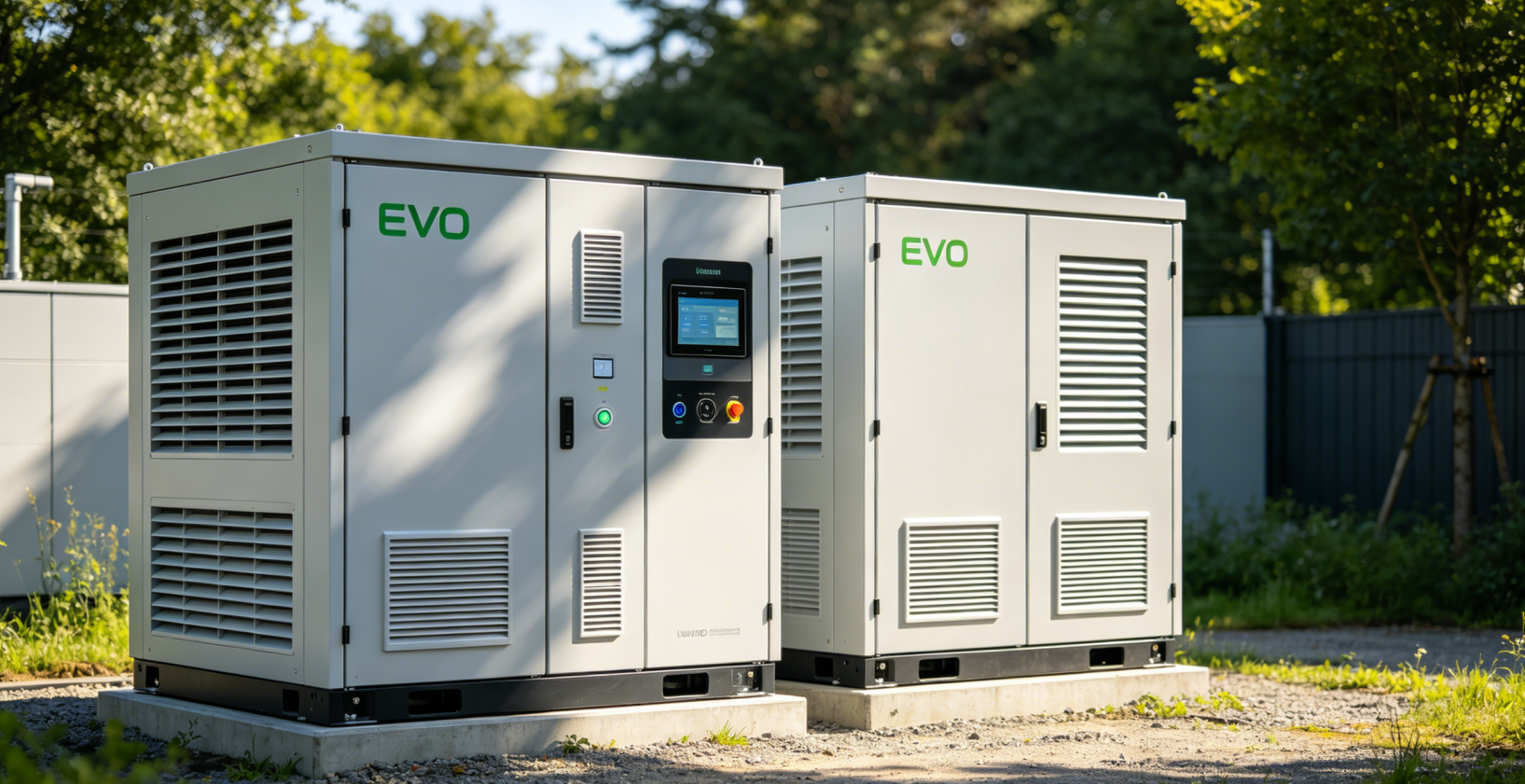
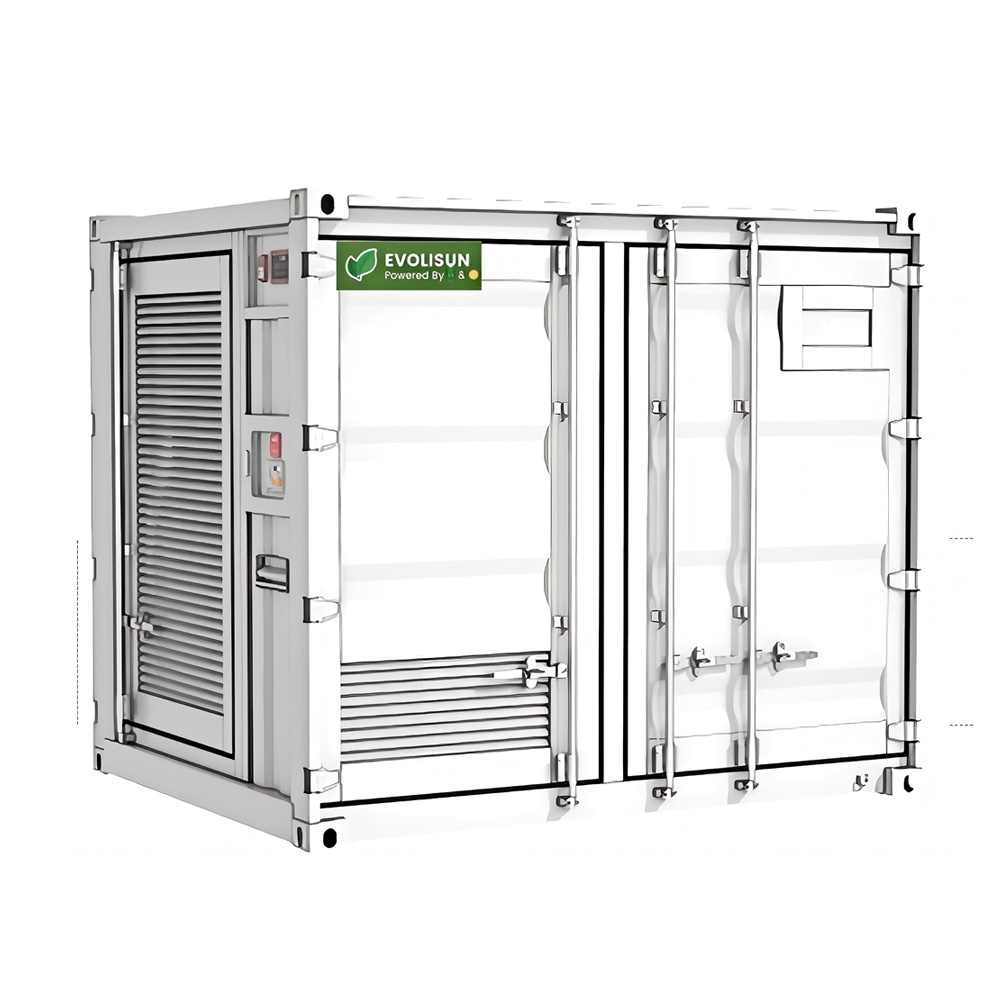
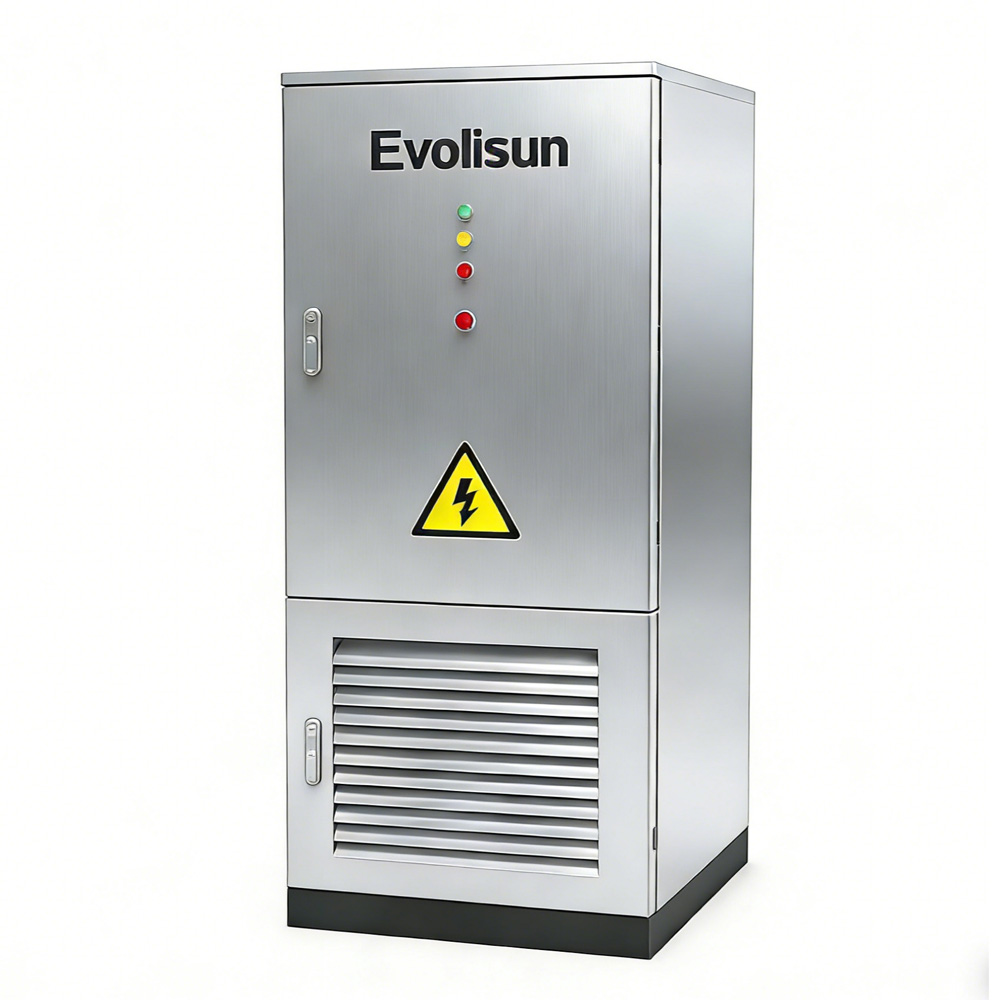
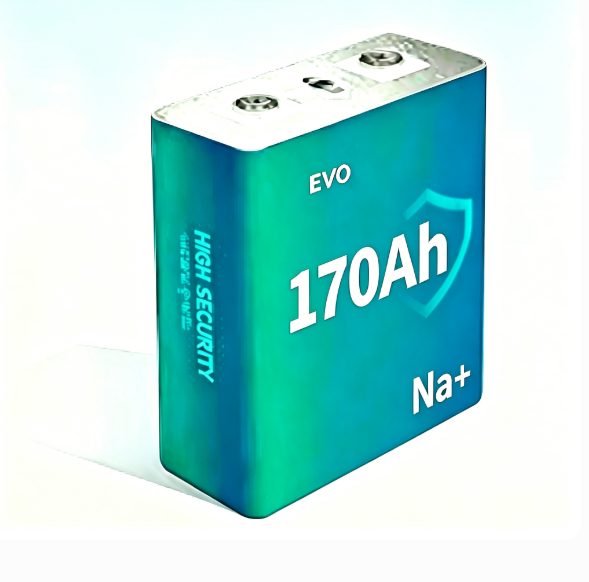
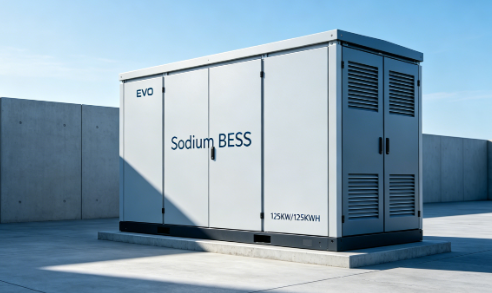
This product is a 125kW/125kWh integrated sodium-ion outdoor energy storage cabinet, adopting high-safety, long-service-life, wide-temperature-range 170Ah polyanion-type (NFPP) sodium-ion batteries (Model: EVO‑SNC‑P510‑170). It integrates battery clusters, BMS (Battery Management System), PCS (Power Conversion System), thermal management system, fire protection system and intelligent monitoring system into one unit, specially designed for outdoor industrial and commercial energy storage, microgrid, backup power supply, new energy grid connection and other scenarios. Relying on the strategic positioning of sodium batteries as a "golden complementary" solution, the product fundamentally eliminates the potential safety hazard of lithium dendrites unique to lithium-ion batteries. It boasts core advantages such as high-efficiency energy storage, stable output, intelligent operation and maintenance, and strong environmental adaptability, suitable for various complex outdoor working conditions, and meets the national strategy of "Carbon Peaking and Carbon Neutrality" and the large-scale development demand of new energy storage.
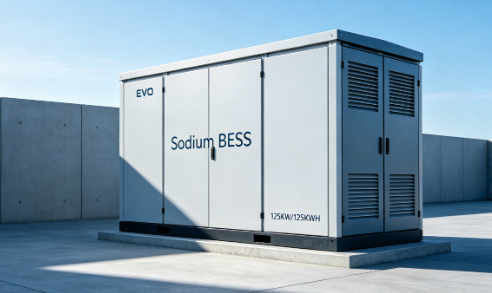
Model: EVO‑SNS‑ESS‑125/125‑OU
• EVO: Product series identification
• SNS: Exclusive identification for Sodium-Ion Battery, distinguished from Lithium-Ion Battery
• ESS: Energy Storage System
• 125/125: Rated power 125kW / Rated capacity 125kWh
• OU: Outdoor type, suitable for complex outdoor environments
• High Safety: The 170Ah sodium-ion battery (Model: EVO‑SNC‑P510‑170) adopts polyanion-type (NFPP) material system with excellent thermal stability. Its charge carrier is sodium ion (Na⁺) instead of lithium ion (Li⁺), so no lithium dendrites will be formed. In strict accordance with the national standard GB/T 44265‑2024, it has passed multiple safety tests including nail penetration, crush, overcharge, short circuit, thermal runaway and drop tests, with no fire or explosion after tests. The maximum temperature rise in nail penetration test is only 163.5℃, and the maximum temperature rise in overcharge test is only 23.6℃. Coupled with multi-stage fire protection, it eliminates risks such as short circuit and fire, and its safety is better than that of lithium iron phosphate batteries.
• Wide Temperature Adaptability: Discharge temperature covers -40℃~+60℃ (different discharge rates correspond to different temperatures: ≤1P discharge for -40℃≤T<-20℃, -20℃≤T<10℃, 10℃≤T<30℃; ≤0.5P discharge for 30℃≤T<45℃; ≤0.25P discharge for 45℃≤T<60℃). Charging temperature ranges from 0℃ to +55℃ (0℃<T≤15℃: 0.2P charge to 80% SOC; 15℃<T≤45℃: 0.5P charge to 100% SOC; 45℃<T≤55℃: 0.5P charge to 80% SOC). Capacity retention rate at -20℃ is ≥90% (≥153Ah), and at -40℃ is ≥90.4% (≥153.7Ah). It perfectly solves the industry pain point of energy storage system failure in extremely cold regions in winter, and adapts to extreme outdoor environments such as high cold and high temperature.
• Long Cycle Life: The 170Ah cell is manufactured by lamination process, with cycle life ≥6000 cycles (100% DoD, 25±2℃, 0.5P/0.5P charge/discharge, capacity retention ≥80%), ≥8000 cycles (90% DoD, 25±2℃, 0.5P/0.5P charge/discharge, capacity retention ≥80%). Far exceeding conventional lead-acid batteries, the overall service life of the system is ≥8 years, greatly reducing long-term operation and maintenance costs.
• High Efficiency and Energy Saving: PCS conversion efficiency ≥98.5%, system self-loss ≤3%/day, high energy utilization rate; cell charge/discharge efficiency ≥96.5% (0.5P, 25℃), and the charge/discharge efficiency at 0.25P can reach 97%. It meets the needs of peak-valley arbitrage, new energy consumption and other scenarios, improving return on investment.
• High Protection Adaptability: The cabinet has IP55 protection level and C4 corrosion resistance level, which can resist lightning, wind load, snow load and earthquake, and adapt to complex outdoor environments such as high altitude, sand, high humidity and high salt fog. No special machine room is required, and it can be used directly when installed outdoors.
• Intelligent Integration: Three-level control of BMS+PCS+EMS, supporting dual monitoring of local touch screen and cloud, remote commissioning, fault early warning and location, convenient operation and maintenance. The BMS can accurately adapt to the charge/discharge characteristics and balancing requirements of 170Ah cells to ensure cell consistency and service life.
2. Overall Technical Parameters
Item | Specification |
Rated Energy Storage Capacity | 125kWh |
Rated Charge/Discharge Power | 125kW (continuous), 150kW (peak, 10min) |
DC Nominal Voltage | 750Vdc (Voltage range: 600~950Vdc) |
AC Rated Voltage | 400Vac (-15%~+15%), three-phase four-wire + PE |
Rated Frequency | 50Hz/60Hz (±10% adjustable) |
System Efficiency (AC-AC) | ≥90% |
Maximum Charge/Discharge Current | DC: 167A; AC: 180A |
Power Factor | -1~+1 continuously adjustable (≥0.99 under rated working condition) |
Total Harmonic Distortion of Current | <3% (under rated working condition) |
Protection Level | IP55 (cabinet) |
Corrosion Protection Level | C4 (suitable for coastal and industrial corrosive environments) |
Operating Temperature | Discharge: -40℃~+60℃ (rate adaptation); Charge: 0℃~+55℃ (stage adaptation) |
Storage Temperature | -30℃~+70℃ |
Operating Humidity | 5%~95%RH (non-condensing) |
Altitude | ≤4000m (derating required above 4000m) |
Cooling Method | Forced liquid cooling (anti-condensation design) |
Dimensions (L×W×H) | 1000×1500×2480mm |
Weight | Approx. 3350kg (for 170Ah cells, single cell weight 4.75±0.20kg) |
Installation Method | Outdoor floor-standing (no machine room required) |
• Operating Modes: Supports grid-connected (peak-valley arbitrage, frequency and voltage regulation) and off-grid (island power supply) modes, with seamless switching between grid-connected/off-grid (switching time ≤20ms) to meet power supply needs in different scenarios.
• Protection Functions: Comprehensive protection including overvoltage, undervoltage, overcurrent, short circuit, overtemperature, low temperature, insulation detection, reverse connection, lightning strike, surge, etc. It can accurately match the voltage (1.5V~3.5V) and temperature protection thresholds of 170Ah cells (EVO‑SNC‑P510‑170) to eliminate potential safety hazards.
• Communication Interfaces: Equipped with CAN 2.0, RS485, Ethernet (TCP/IP) interfaces, supporting Modbus and IEC61850 protocols, realizing data interconnection, and can transmit 170Ah cell operating parameters in real time.
• Monitoring Functions: Local 7-inch touch screen can view operating parameters and fault records in real time; cloud platform supports remote monitoring, data storage, report generation, remote upgrade and fault early warning, and can accurately monitor key parameters such as voltage, temperature and SOC of 170Ah cells.
• Fire Protection System: Equipped with perfluorohexanone gas fire extinguishing system, coupled with multi-level early warning of temperature, smoke and flammable gas, automatic fire extinguishing, no residue, no damage to equipment, suitable for safety protection needs of 170Ah cells.
• Balancing Function: Cell-level passive balancing, balancing current ≥1A, effectively improving the consistency of 170Ah cells, extending battery service life, and matching the long cycle characteristics of cells.
3. Sodium-Ion Cell Parameters (Core Component)
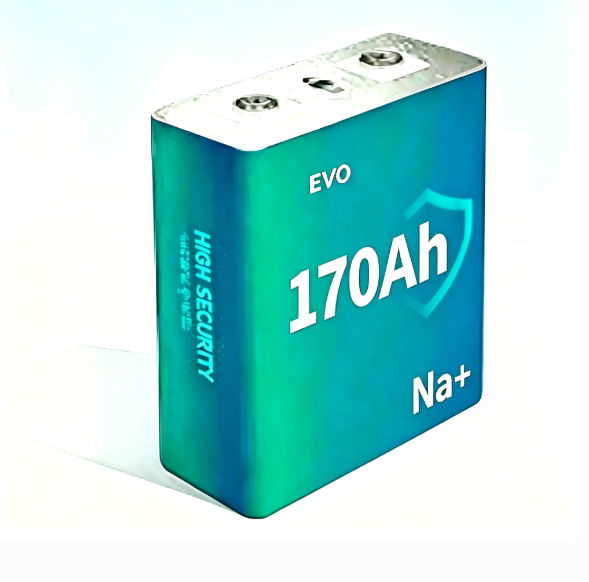
• Cell Model: EVO‑SNC‑P510‑170 (square aluminum case)
• Material System: Polyanion-type (NFPP) cathode / hard carbon anode (adapted to sodium-ion characteristics, no conditions for lithium dendrite formation)
• Cell Type: Square hard case, lamination process
• Shipping State: 38% SOC (State of Charge)
• Temperature Rise Requirement: Temperature rise ≤10℃ under 25±2℃ and 0.5P charge/discharge conditions
3.2 Electrical Performance Parameters
Item | Specification |
Rated Capacity | 170Ah (0.5P discharge, 25±2℃, ≥170Ah for new batteries) |
Nominal Voltage | 2.85V (platform voltage, under 25±2℃, 0.5P discharge) |
Voltage Range | Charge cutoff: 3.5V; Discharge cutoff: 1.5V (absolute maximum charge voltage 3.5V) |
Rated Energy | 484.5Wh (25±2℃, 1.5-3.5V, 0.5P constant power charge/discharge) |
DC Internal Resistance (1KHz) | ≤0.3mΩ (25±2℃, new battery at 38% SOC) |
Standard Charge Rate | 0.5P (25±2℃, charge to 3.5V, fully charged in about 2h) |
Maximum Charge Rate | 1P (25±2℃, continuous charge) |
Standard Discharge Rate | 0.5P (25±2℃) |
Maximum Continuous Discharge Rate | 1.5P (unlimited duration) |
Cycle Life | ≥6000 cycles @100% DoD; ≥8000 cycles @90% DoD (25±2℃, 0.5P/0.5P, capacity retention ≥80%) |
Charge/Discharge Efficiency | ≥96.5% (0.5P, 25℃), up to 97% at 0.25P |
Rate Performance | 1.0P discharge capacity / standard discharge capacity ≥95%, 1.0P discharge energy / standard discharge energy ≥90% |
3.3 Environmental & Safety Parameters
Item | Specification |
Operating Temperature (Discharge) | -40℃~+60℃ (rate adaptation, see 1.3 Wide Temperature Adaptability) |
Operating Temperature (Charge) | 0℃~+55℃ (stage adaptation, see 1.3 Wide Temperature Adaptability) |
Low-Temperature Capacity Retention | -20℃/1P discharge: ≥153Ah (≥90%); -40℃/1P discharge: ≥153.7Ah (≥90.4%) |
Storage Temperature | -30℃~+70℃ (adjust to 10% SOC if stored for more than 30 days) |
Storage Performance | Normal temperature (25±2℃) storage for 28 days: remaining capacity ≥95%, recoverable capacity ≥97%; high temperature (60±2℃) storage for 7 days: remaining capacity ≥85%, recoverable capacity ≥90% |
Safety Tests | In accordance with GB/T 44265‑2024, passed nail penetration, crush, short circuit, overcharge, over-discharge, thermal runaway, vibration (5G), drop tests, no fire or explosion; maximum temperature rise 163.5℃ in nail penetration test, 23.6℃ in overcharge test |
Mechanical Characteristics | Aluminum case material, weight: 4.75±0.20kg; dimensions: 60×180×130mm (conventional size, subject to product drawings) |
• Module Composition: 16S × 170Ah → Single module capacity: 48V/8.16kWh (Module Model: EVO‑SNM‑48/8.16)
• Cluster Composition: 15 modules in series → Single cluster capacity: 720V/122.4kWh (Cluster Model: EVO‑SNC‑720/122.4)
• System Composition: 1 cluster + small expansion unit → Total capacity: 750V/125kWh (System Model: EVO‑SNS‑ESS‑125/125‑OU)
• Total Number of Cells: 16×15=240 pieces (170Ah large-capacity cells greatly reduce the number of cells, improve system stability, and mixing of cells with different P/N numbers is strictly prohibited)
Composed of 170Ah sodium-ion cells (Model: EVO‑SNC‑P510‑170), standardized modules, high-voltage control box (including fuse, contactor, precharge circuit). Adopts EVO series standardized structure, adapted to 170Ah cell characteristics; equipped with independent BMS slave controller, collects cell voltage, temperature, current data in real time, implements balancing control and safety protection, strictly matches cell charge/discharge parameters to ensure stable operation of battery clusters.
4.2 Power Conversion System (PCS)
• Model: EVO‑PCS‑125K
• Rated Power: 125kW, bidirectional reversible conversion
• Topology: Three-level IGBT, conversion efficiency ≥98.5%
• Functional Features: Supports grid-connected/off-grid dual modes, with island protection and black start functions, accurately adapts to the charge/discharge characteristics of 170Ah cells (EVO‑SNC‑P510‑170) (0.5P standard charge/discharge, 1P maximum charge, 1.5P maximum continuous discharge) to ensure efficient energy conversion.
4.3 Battery Management System (BMS)
• Model: EVO‑BMS‑750 (exclusively adapted to 170Ah cells)
• Architecture: Three-level architecture of main BMS + cluster slave + cell sampling board
• Core Functions: Accurate estimation of SOC/SOH/SOP (error ≤±3%), overvoltage/undervoltage/overcurrent/overtemperature protection (matching the cell voltage range of 1.5V~3.5V and temperature thresholds), cell balancing, fault diagnosis and recording. Optimize balancing strategy for 170Ah large-capacity cells to improve cell consistency; access temperature sensors as required to monitor cell temperature in real time and establish battery management files.
• Model: EVO‑TMS‑2400
• Cooling Method: Forced liquid cooling cycle + electronic fan auxiliary heat dissipation
• Temperature Control Accuracy: 25℃±5℃, with anti-condensation design. Optimize heat dissipation efficiency according to the heating characteristics of 170Ah cells (temperature rise ≤10℃ at 0.5P charge/discharge) to avoid high temperature affecting battery life; cooperate with electrical box heat dissipation design to prevent cell damage caused by poor heat dissipation.
• Model: EVO‑FS‑10
• Early Warning Mode: Multi-level early warning of temperature sensors, smoke detectors, flammable gas sensors
• Fire Extinguishing Device: Perfluorohexanone automatic fire extinguishing system, no residue, no damage to equipment, suitable for safety protection needs of 170Ah cells, and can respond quickly when thermal runaway and other abnormalities occur in cells.
4.6 Intelligent Monitoring System
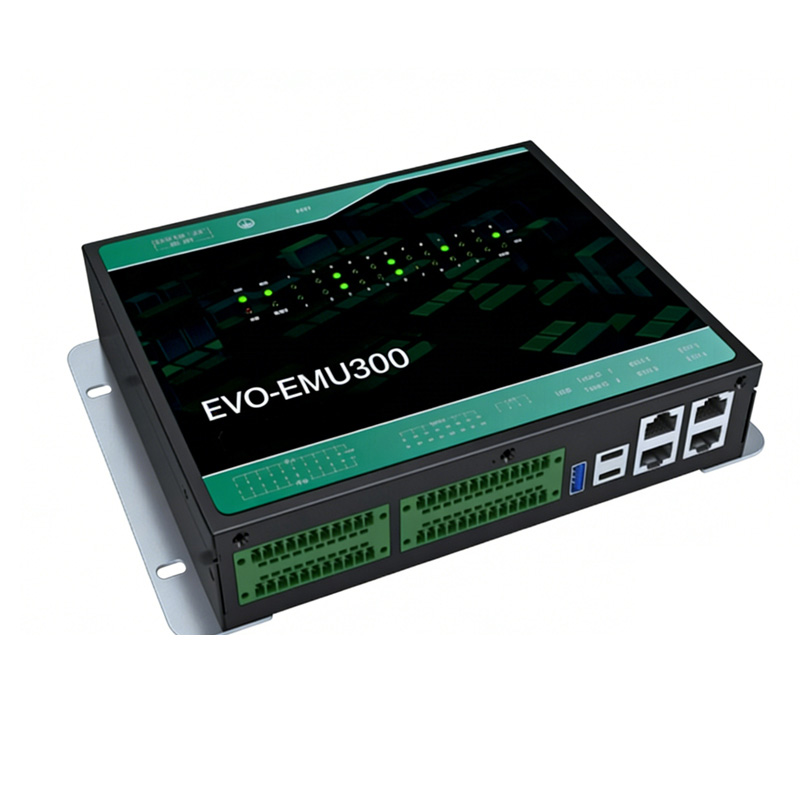
• Local Monitoring: 7-inch touch screen, supports parameter setting, status viewing, fault query, and can display key parameters such as voltage, temperature and SOC of 170Ah cells in real time.
• Cloud Monitoring: EVO-EMS cloud platform (PC terminal/mobile APP), supports remote monitoring, data storage, report generation, remote upgrade, fault early warning and location, and can retain full-life cycle operating data of cells for quality responsibility division.
• Site: Level hardened ground, load-bearing capacity ≥5.5 tons/㎡ (adapted to the weight of 170Ah cell cabinet), well ventilated, no flammable, explosive or corrosive media, away from open flames and high-temperature sources to avoid cell temperature exceeding 55℃.
• Electrical: Connected to national standard 400V three-phase power grid, grounding resistance ≤4Ω, wiring in accordance with electrical safety standards, strictly connect cell positive and negative poles according to markings, reverse connection is prohibited.
• Space: Reserve ≥1m maintenance space around the cabinet and ≥1.5m space at the top for heat dissipation and operation and maintenance to ensure cell heat dissipation needs; electrical box must meet waterproof and dustproof requirements to avoid cell corrosion and rust.
1. Installation and Fixation: Place the cabinet stably at the designated position, fix it firmly to ensure the cabinet is level, avoid mechanical vibration, collision and pressure impact to damage cells.
2. Wiring Operation: Complete DC wiring, AC wiring and communication wiring in sequence, check the firmness of wiring to avoid reverse connection and virtual connection. It is strictly prohibited to use plastic for electrical connection to prevent electric arc and spark caused by friction.
3. Power-on Self-Test: Turn on the power, start the equipment, complete system self-test, confirm no fault prompts, and focus on checking the adaptability of BMS to 170Ah cell (EVO‑SNC‑P510‑170) parameters.
4. Parameter Setting: Set charge/discharge strategy, protection parameters, etc. through local touch screen or cloud platform (strictly adapt to charge/discharge rate, voltage range and temperature threshold of 170Ah cells).
5. Mode Selection: Select grid-connected or off-grid mode according to actual needs, the system enters normal operation state, monitor cell temperature in real time to avoid exceeding the allowable range.
6. Shutdown Operation: Stop the equipment first, disconnect AC power, then disconnect DC power, finally lock the cabinet door and make shutdown records; if it is expected to shut down for more than 30 days, adjust cell SOC to 10%.
• Daily Maintenance: Check the cabinet appearance, indicator lights and vents every day, record 170Ah cell and system operating parameters (voltage, temperature, SOC, etc.), troubleshoot abnormal conditions; if cell temperature exceeds 55℃, shut down immediately.
• Monthly Maintenance: Clean the cabinet surface and vents, check the tightness of wiring terminals, calibrate sensor accuracy, focus on checking the connection parts of 170Ah cell modules to ensure no looseness or heating; if cells are stored for 3 months (10% SOC), charge and discharge once and adjust SOC to 10%.
• Annual Maintenance: Comprehensively inspect 170Ah cell status, BMS/PCS functions, fire protection system and thermal management system, replace aging parts, conduct comprehensive system calibration; it is strictly prohibited to modify BMS design and framework without permission to ensure it adapts to cell characteristics and ensure long-term stable operation of equipment.
• It is strictly prohibited to disassemble, crush, puncture 170Ah sodium-ion cells (Model: EVO‑SNC‑P510‑170) and modules, and short-circuit battery positive and negative poles to avoid safety accidents.
• It is strictly prohibited to use this product in high-temperature, open-flame, flammable and explosive environments to avoid affecting the thermal stability of the battery; under normal use and storage conditions, cell temperature must not exceed 55℃, if exceeded, BMS must shut down the battery immediately.
• Equipment installation, maintenance and overhaul must be operated by professional electricians. Before operation, all power supplies must be disconnected and safety protection measures must be taken; cell testing must be carried out by professional personnel in professional laboratories with appropriate protective equipment.
• If the equipment has liquid leakage, smoke, odor, abnormal heating and other conditions, shut down and cut off the power immediately, stay away from the site, and contact the manufacturer’s technical personnel in time. Do not handle it by yourself; if electrolyte leaks, avoid skin and eye contact, rinse with plenty of water and seek medical attention after contact.
• After 170Ah sodium-ion cells are scrapped, they must be recycled uniformly in accordance with environmental protection requirements. Do not discard them at will to avoid environmental pollution; it is forbidden for anyone or animals to swallow any parts or substances contained in the cells.
• Lightning protection measures must be taken in thunderstorm weather to avoid equipment damage caused by lightning strikes, and regularly check the effectiveness of lightning protection devices; do not use batteries without BMS or similar systems.
• If abnormal charging termination occurs during charging (such as overtime charging, overvoltage/overcurrent termination), stop charging and troubleshoot faults, and resume charging only after being inspected and qualified by professional personnel.
• Warranty Period: 3-year whole machine warranty, 5-year 170Ah sodium-ion cell warranty (under normal use conditions, non-human damage; if not used in accordance with the specification, no complete monitoring data retained, or cell damage caused by non-manufacturer supporting electrical box design problems, warranty is not provided).
• Service Scope: Free repair and replacement of non-human damaged EVO series components and 170Ah sodium-ion cells within the warranty period, free technical support.
• Technical Support: 7×24 hours remote technical service, on-site service within 48 hours in core areas to help solve various problems in equipment operation; the manufacturer reserves the right to modify cell specifications and performance parameters, please confirm the latest status before ordering.
• Industrial & Commercial Scenarios: Used for peak-valley arbitrage, demand-side response, backup power supply, reduce demand electricity charges. 170Ah large-capacity cells can improve energy storage efficiency, reduce operation and maintenance costs, and their long cycle characteristics further reduce long-term use costs.
• New Energy Scenarios: PV and wind power grid-connected energy storage, smooth output fluctuations, absorb abandoned wind and light, improve new energy utilization rate. Wide temperature adaptability characteristics adapt to extreme temperature environments in outdoor new energy scenarios.
• Microgrid Scenarios: Independent power supply for islands, remote areas and areas without grid coverage, adapt to complex outdoor environments, ensure power supply stability. The high safety and wide temperature characteristics of 170Ah cells can adapt to complex working conditions in remote areas.
• Industrial Scenarios: Backup power supply for mines, oilfields, factories and other places, improve power supply reliability, avoid production losses caused by power outages. Its high safety and long service life characteristics adapt to the long-term operation needs of industrial scenarios.